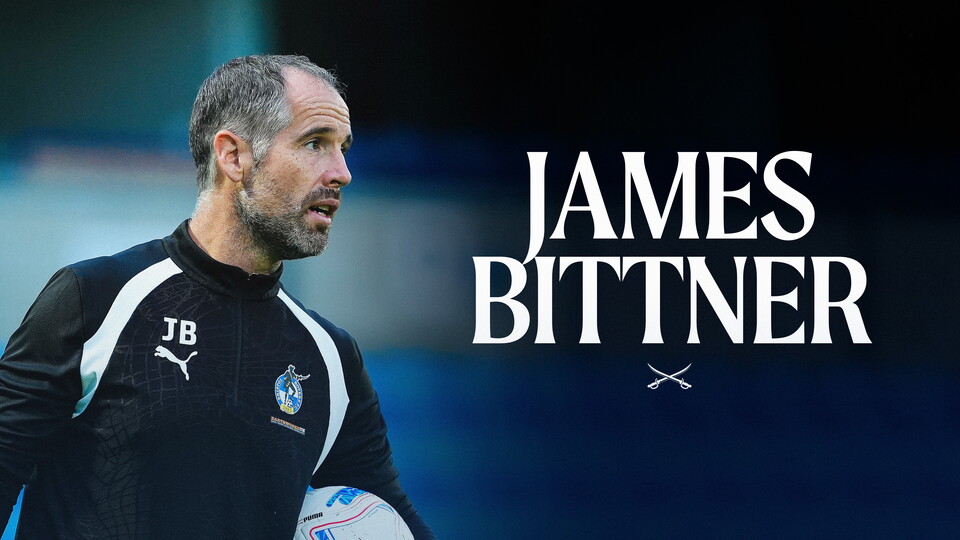
You might have thought a footballer who scored almost 70 goals in one season as an academy player was destined to be a striker, but James Bittner had other ideas.
As a youngster, Bittner loved diving around to stop goals going in and studied the best goalkeeping practices off it, living and breathing his craft. The 44-year-old coached from a young age, so moving into coaching after his playing days was a natural step.
He spent time at Reading, Cheltenham and Barnsley before moving to Bristol Rovers in February 2025, crafting unique, well-thought-out plans to suit the goalkeepers in front of him. No two goalkeepers are the same, so neither are the sessions, with Bittner tailoring his sessions to get the most out of his shot-stoppers.
Speaking to the Having a Gas podcast, Bittner reflected on his career, coaching methods and why he loves working at the Pirates...
BITTNER'S EARLY LIFE
"I used to play in goal for the year above, which was on a Saturday morning, and I used to play up front for my age on a Saturday. I had 67 goals in one season as a striker; I probably chose the wrong position, unfortunately. I should have stayed up front.
"I have always played a lot of sports: basketball, cricket, tennis, etc. With that natural hand-eye coordination, I have always enjoyed being in goal. When you're a kid growing up, six, seven, eight, you always go in goal for a bit, and you're on the pitch for a bit.
"I loved throwing myself around, and I loved getting dirty. I used to play on the pitch and in goal for different teams on different days, and got picked up at 12 or 13 for an academy. Once I got picked up, I had to choose what I wanted to do. You've got a chance to play for a professional club in goal, so I was like, 'maybe I should go down that avenue."
PLAYING CAREER
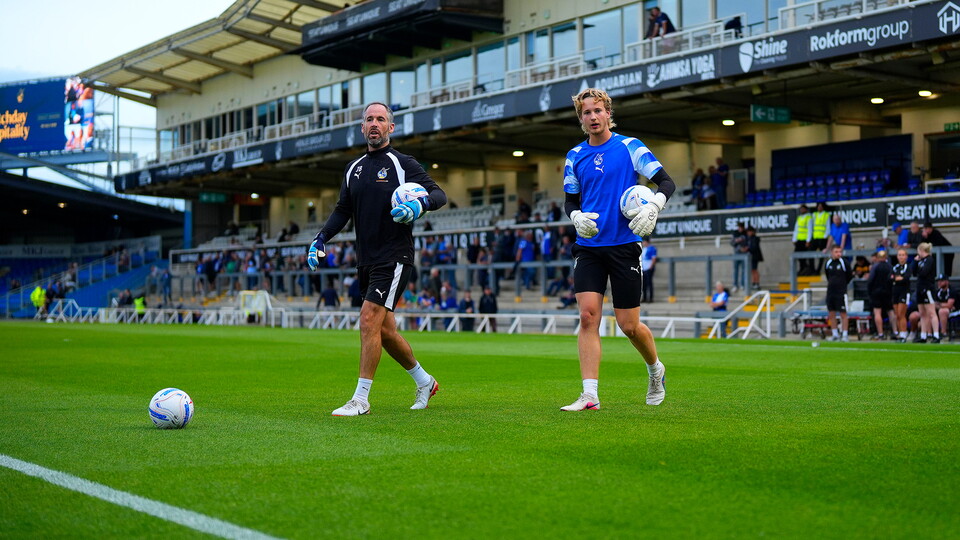
"I started at Swindon back in 97/98 in the Championship, and we had a half decent Championship team as well. There were some good players at the club at the time, good managers as well. I was lucky to transfer to Fulham when I was 18 and spent a couple of years at Fulham.
"I ended up being in the Premier League with Fulham with some unbelievable coaches, managers and players there. I was at Queens Park Rangers, Bournemouth, and worked my way down and ended up playing at Exeter, Plymouth and Newport.
"I have been a professional in the Premier League; I have been a professional in the Championship, League One, League Two and National League. So, I have experienced the whole thing. I started coaching when I was 16 at Swindon. When I was a WTS, I used to coach the centre of excellence. So, I was coaching kids one year below me.
"I have always coached. I went to Fulham; I coached in the academy there as well. I have always liked coaching, and that part of me, even when I was a professional, and I was sat on the bench with these people around me, these managers around me, was always listening and always soaking in what they were saying.
"Although my career was not the best career on the pitch, for what I am doing now, it was probably one of the better ones because I have learned from the elite. I have learned from Premier League managers, League Two and non-league managers as well. There are pros and cons to everyone, and you take bits and bobs off them and learn from that."
HIS ROLE MODELS
"I was a Liverpool fan growing up, so in the 80s, Bruce Grobbelaar. The extravagant Bruce Grobbelaar. Coming for crosses, a little bit kamikaze, a little bit crazy, probably typified goalkeeping, and on the other side of Merseyside, probably the best goalkeeper in the world was Neville Southall. He was a big, massive shot-stopper.
"I was lucky; I went on to have a coach who actually worked with Neville at Everton. You hear the stories about him, his work ethic off the pitch and his attitude in training. He just loved being a goalkeeper, loved throwing himself around and making saves. I think that's what young boys fall in love with. It's flying into the top corner, flying into the bottom corner, making those big moments, those big saves, stopping the strikers from scoring goals."
DEALING WITH UPS AND DOWNS
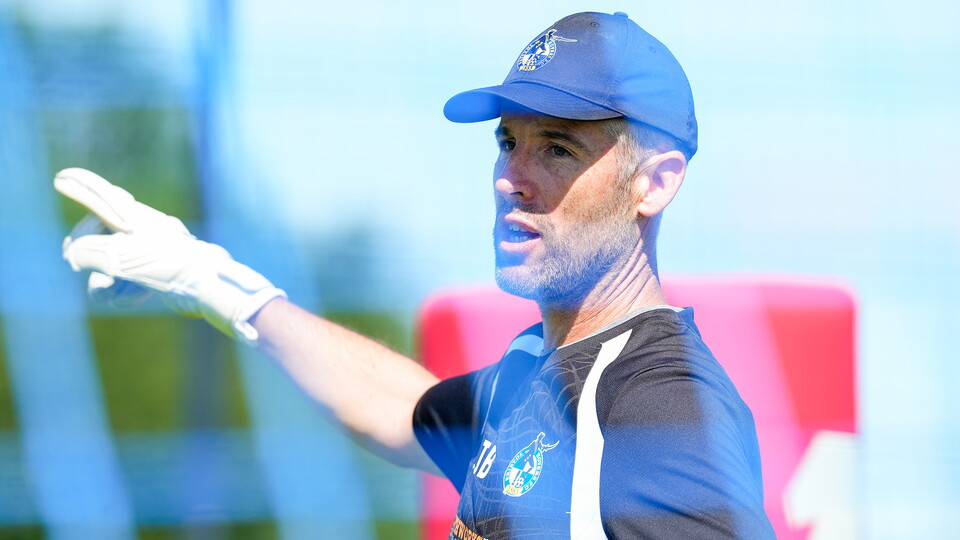
"It's a new season, new start, lots of changes. It's been an up-and-down start to the season, but I don't think we're in a bad place. Players, staff and fans realise in this industry things can change so quickly for the good, the bad and the ugly as well.
"One minute, you're flying high, and everything is rosy, and it can change quickly and vice versa. You can be down in the dumps and all of a sudden, things turn; you go on a run of victories, and everyone is feeling good as well. Everyone says the old saying: never too high, never too low.
"It's far easier to say it than to actually do it. It can probably be quite emotional at times, so it's not always the easiest thing. You wear your heart on your sleeve, which a lot of people do. So, you do feel the tough times personally. Sometimes, you take it out on the family, which is not always on purpose, but it can go back to the family. It's a fantastic industry; I wouldn't change the last 30 years of my life at all, but it has its ups and downs. It's not always rosy.
"As a player or a coach, you have a three or four-year contract but that doesn't mean you're at a club for three or four years. You always have that fear factor if things aren't going well. As far as coaches are concerned, you do feel the pain personally. If a goalkeeper goes through a tough time, I feel it personally as well."
FINE MARGINS IN GOALKEEPING
"In our position particularly, you're dealing in milliseconds and millimetres. What can be a fantastic save is literally a millimetre or two away from being a goal as well. It's fine margins in our industry, and at the moment, we're going through a patch where we're not making a lot of saves and a lot of the shots are going in.
"Is Brad making mistakes? Touch wood, no, he is not. Can we make more saves? Yes, of course we can. I know personally from playing that you go through two or three games and you lose one-nil, two-nil, and you're thinking, 'I've not done anything wrong, but I've also not made any saves'.
"It's a horrible feeling, and the worst thing we can do in our position is then go and chase the game and try and make that big save, come for that big cross, and that compounds it sometimes and gets worse and worse and worse. It's psychological and mental: dealing with the highs, dealing with the lows. As I said earlier, never too high, never too low, and always trusting the process, thinking, 'I'm doing the right things on the training pitch, and I'm doing the right things off the pitch; it will come good at some point."
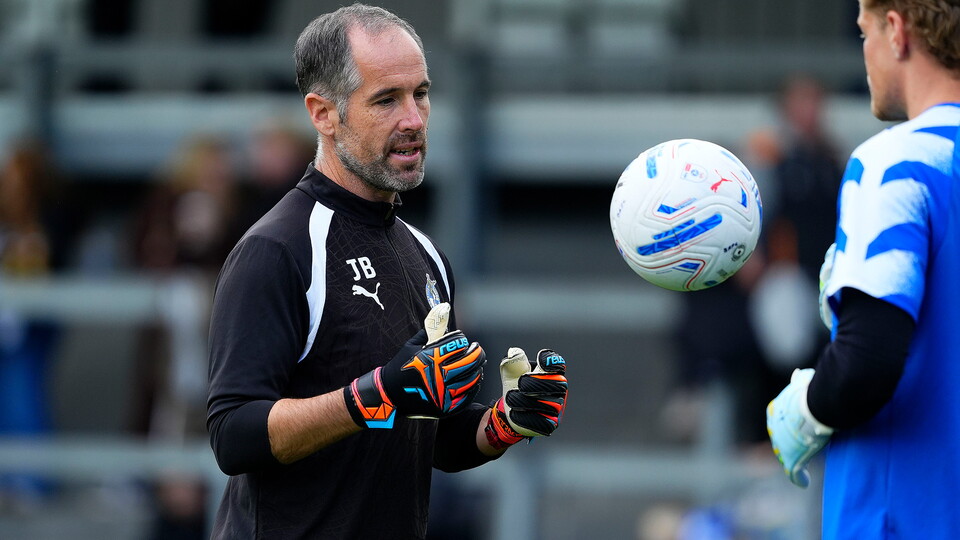
MENTAL TOUGHNESS AS A GOALKEEPER
"Your mental toughness is massive. We, to a certain degree, have to play every game perfectly. Everything we do normally ends in some sort of consequence. It's tough, and that's the one where if things aren't going so well, then you need to trust the process and try and stay level-headed because if you try and change that mentality and change what you're doing, it will get worse and worse and worse. Ride the tough times through and hope for the good times.
"Everyone will probably see some elite goalkeepers over the years that probably aren't physically the best or technically the best, but have a fantastic mentality. Edwin van der Sar, for example, wasn't athletic, wasn't powerful, wasn't technically amazing, but was one of the best goalkeepers in the world. Mentality was massive."
ROLE AS A GOALKEEPER COACH
"There isn't a right or wrong. Nobody owns football. Nobody owns goalkeeping. There are no rights or wrongs in what you do. Everyone's different; everyone has their skill sets, their strengths, their weaknesses. It's trying to work out what works for that individual goalkeeper, what's good for them, and how they should play. Is it aggressive and on the front foot? Is it deeper and safer?
"There is a really horrible trend in football that people talk about: what players can't do, and that's for outfield players and goalkeepers. Actually, what can they do and hone in on their super strengths, as we call it. What's he really good at, and how can he affect the game?
"Concentrate on what they can do and not what they can't do. Of course, you work on the weaknesses, but don't neglect the strengths as well because if you can make those strengths even better, that would be some goalkeeper."
ADAPTING TO DIFFERENT GOALKEEPERS
"Even biomechanically, they are different. Brad will set differently; his legs will be a different width from what Luke [Southwood's] will be because of their size and weight and everything else as well. Every goalkeeper is individual.
"There is no one-size-fits-all. It's trying to adapt and look at the individual physically, technically, tactically, and I will probably throw 1,000 things at them, and maybe only one actually works for them. Unless you try stuff, you don't know what you can and can't do."
COACHING TEAM AT ROVERS
"I am lucky here because of the way the manager works; I have lots of time. I can do basically what I want with the goalkeepers when I want, which is quite nice. So, there is not a lot of input in that.
"I always get 45 minutes to an hour on the grass with the goalkeepers, which doesn't happen at a lot of places. So, it's a good environment for the boys. They get so much physical work off the pitch, physical work on the pitch, and goalkeeping technical and tactical work. Then, they go in with the team.
"At some clubs, at some levels, you get 20 minutes of goalkeeper coaching, and then you're doing other stuff with the outfield lads. In that way, I am very, very lucky that I do get a lot of time and I can get a lot of work into the lads."
AMBITIONS AT THE GAS
"Everyone wants to win games, wants to win trophies and wants to win leagues. If you want to win, that comes with pressure, and the more you win, the more pressure you get as well. So, it's not a bad place to be because if you're under pressure, it means you're doing something right.
"This is a fantastic football club; it's a huge football club, and it could be a very, very big football club. This club shouldn't be in League Two; it shouldn't be anywhere near League Two, but it is in League Two for a reason, whatever that reason is. It's all of our jobs to try and get it back to where it should be at least, and then move it on from there as well."